



Quick answer: Fetal transducers fail mostly from physical wear: cracked housings, damaged cables and connectors, fluid that gets inside, worn belt buttons and, on wireless Avalon CL transducers, aging batteries. Gentle handling, wipe-only cleaning and regular inspection prevent many failures, and many damaged transducers can be repaired rather than replaced.
This guide covers Philips Avalon wired and cableless transducers and GE Corometrics toco and ultrasound transducers, for biomedical teams and labor and delivery managers.
Types of Fetal Transducers
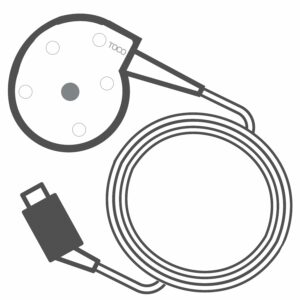
Fetal monitoring uses three main transducer types. An ultrasound transducer tracks fetal heart rate with Doppler. A toco transducer measures uterine activity with a strain gauge. An ECG/IUP transducer or adapter connects internal sensors: a fetal scalp electrode for direct fetal ECG (DECG) and a catheter for intrauterine pressure (IUP).
- Ultrasound: needs coupling gel and a good position over the fetal heart
- Toco: applied without gel; it reports relative pressure, so the trace is zeroed between contractions
- Toco MP and Toco+ MP (Philips Avalon): add Smart Pulse maternal pulse sensing, and the Toco+ versions accept DECG, maternal ECG or IUP adapter cables
Wired vs. Wireless: Avalon CL and Corometrics
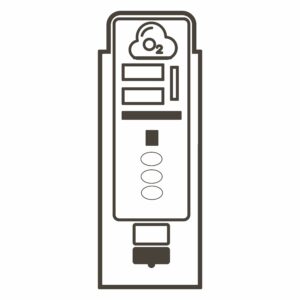
Philips Avalon transducers come in wired and cableless versions. The cableless Avalon CL system uses a base station that docks, pairs and charges each transducer and connects to Avalon FM20, FM30, FM40 or FM50 monitors. GE Corometrics Nautilus transducers are wired and plug into the monitor with a round, keyed 12-pin connector.
The Avalon CL family includes the 866074 base station, 866075 Toco+ MP, 866076 ultrasound and 866077 ECG/IUP transducers, and requires Avalon software release J.3 or later. Corometrics transducers come in knob, wings or combined belt-attachment styles.
1. Cracked Housings and Damaged Sensing Faces
Cracks are the most visible transducer failure and the one most likely to cause others. A cracked housing or chipped sensing face lets gel, amniotic fluid and disinfectant reach the crystals, strain gauge and electronics. It also prevents proper cleaning, so the transducer should come out of service right away.
Why it happens
Transducers are dropped from beds and carts, caught in bed rails and stepped on when cables trail on the floor. Pushing on a toco diaphragm or using tools on it also causes damage.
How to avoid it
Hang transducers on the monitor or cart when not in use, keep cables off the floor and never press on the toco diaphragm. Inspect housings for cracks, discoloration and excessive scratches between patients.
2. Cable and Connector Damage
Intermittent traces that change when the cable moves usually point to cable or connector damage. Wired transducers flex constantly at the strain relief and the connector, and bent, worn or contaminated pins cause dropouts, noise or a monitor that no longer recognizes the transducer.
Why it happens
Pulling the cable instead of the connector, tight wraps, sharp bends near the plug and frequent plugging and unplugging all wear the cable. Side loading on Toco+ adapter sockets damages pins.
How to avoid it
Disconnect by the connector body. GE recommends coiling cables in a loose circle at least 6 inches in radius. Check jackets, strain reliefs and pins at every PM and retire cables with cuts or exposed shielding.
3. Fluid Ingress
Fluid inside a transducer causes drifting toco baselines, weak ultrasound signals and corrosion that eventually ends the transducer’s life. Many Avalon and Nautilus transducers are rated for water use, but that protection depends on intact housings and seals, and connectors are not designed to be soaked.
Why it happens
Soaking during cleaning, wet connectors and seals weakened by drops or harsh chemicals let fluid in. Storing transducers before they are fully dry also allows moisture to work into joints.
How to avoid it
Never immerse transducers or connector ends in cleaning solutions. Wipe, then disinfect with an agent the manufacturer lists, and dry completely before storage. Do not use heat to dry equipment.
4. Belt Button and Attachment Wear
A transducer that will not stay on the belt produces poor traces and frequent repositioning. Belt buttons, knobs and wing loops wear, crack or loosen with daily use, and a damaged attachment can also stress the housing around it. Replacing a worn button is a simple fix compared with a lost signal.
Why it happens
Repeated snapping on and off, over-tightened belts and buttons pried with tools all cause wear. Mixing belt styles that do not match the attachment adds strain.
How to avoid it
Match belts to the attachment style, keep spare belts and buttons on hand, and replace worn parts before they crack. Wash reusable belts with soap and water no hotter than 140°F.
5. Battery and Charging Problems on Avalon CL Transducers
Avalon CL transducers run on a built-in rechargeable lithium-ion battery that charges when docked in the base station. As the battery ages, runtime drops and low-battery alarms come sooner. Damaged charging contacts on the base station can also stop transducers from charging or pairing.
Why it happens
Lithium-ion capacity fades with age and charge cycles. Liquid on the base station contacts, drops and cart impacts cause most base station charging failures.
How to avoid it
Return transducers to the base station after each patient, keep charging contacts clean and dry, and track battery age. Battery replacement uses a dedicated Philips tool and new seal rings, so it is a service task, not a user task.
Fetal Transducer Symptom Quick Guide
Use this table to separate transducer problems from monitor, belt or placement issues. Always confirm the first step with a known-good transducer on the same socket. If the symptom follows the transducer, or there is visible damage, remove it from service and send it in for evaluation.
| Symptom | Likely cause | What to try first |
|---|---|---|
| Toco baseline drifts or will not zero | Strain gauge wear or fluid ingress | Re-zero; try a known-good toco |
| Trace drops when cable moves | Cable or connector damage | Inspect strain relief and pins |
| Weak fetal heart rate signal | Placement, gel or crystal damage | Fresh gel, reposition, swap transducer |
| Transducer not recognized | Bent or dirty connector pins | Inspect pins; try another socket |
| Short runtime on CL transducer | Aging lithium-ion battery | Full charge in base station |
| CL transducer will not charge | Dirty or damaged base station contacts | Try another slot or base station |
Cleaning and Care Checklist
Most transducer damage happens during cleaning and storage, not during monitoring. Following the manufacturer’s cleaning steps, using only listed agents, and inspecting each transducer before it goes back on the cart will extend service life for both Philips Avalon and GE Corometrics transducers.
- Clean first, then disinfect, using a damp wipe rather than spraying the transducer directly
- Avoid bleach, acetone, abrasives, strong solvents and adhesive removers
- Never soak transducers or connectors, and never autoclave them
- Dry completely before storing, and coil cables loosely
- Inspect housings, faces, belt buttons, cables and pins before each use
When to Repair vs. Replace a Fetal Transducer
Repair makes sense for damaged cables, connectors, housings, belt buttons and Avalon CL batteries, especially on Smart and cableless transducers. Replacement is usually the better choice when the crystal array or strain gauge in a passive wired transducer has failed, because those assemblies are generally replaced, not repaired.
- Genuine Philips, recertified: M2734A/M2734B Smart Toco MP, M2735A Toco+ MP and the Avalon CL transducers and base station listed above
- Compatible aftermarket for Philips: M1355A-compatible toco, M1356A-compatible ultrasound and M2725A-compatible wireless toco
- Compatible aftermarket for GE Corometrics: toco in knob, wings or combo style, and ultrasound in knob, wings or combo style
Compatible products are aftermarket parts, not OEM, and are not made or endorsed by Philips or GE HealthCare. Recertified (refurbished) equipment carries a 6-month or 1-year warranty depending on model, and every repair carries a 90-day warranty. See our repair services for fetal monitors and transducers.
Fetal Transducer FAQ
How can I tell whether the toco or the ultrasound transducer is failing?
Swap in a known-good transducer of the same type on the same monitor socket. If the problem follows the transducer, the transducer is at fault. A flat or drifting contraction trace points to the toco, while a weak or dropping fetal heart rate signal with good gel and placement points to the ultrasound transducer.
Can a cracked fetal transducer stay in service?
No. A cracked housing lets gel, fluids and disinfectant into the electronics and can no longer be cleaned reliably. GE’s instructions, for example, say not to use damaged or excessively worn transducers. Remove it from service and send it for evaluation or replace it.
Can the battery in a Philips Avalon CL transducer be replaced?
Yes, but not by the user. The CL transducers use a sealed lithium-ion battery, and replacement uses a dedicated Philips tool and new seal rings so the housing stays watertight. IPR Medical performs CL battery replacement and housing reseal in-house on customer units.
Are compatible GE Corometrics transducers made by GE?
No. The compatible toco and ultrasound transducers IPR Medical sells for Corometrics monitors are aftermarket products. They are not made, sold or endorsed by GE HealthCare. They are built to fit monitors that use the round, keyed 12-pin connector, so confirm your monitor model before ordering.
Can fetal transducers be soaked or autoclaved?
No. Philips and GE both warn against immersing transducers or connector ends in cleaning solutions, and Philips says not to autoclave accessories. Wipe-clean, then wipe-disinfect with an agent the manufacturer lists, and let the transducer dry completely before storage.
Need a Fetal Transducer Evaluated?
IPR Medical repairs fetal transducers in-house, with a free evaluation within 1 to 2 business days and a written estimate before any work. Request a free shipping label, or call (855) 477-8866 Monday through Friday, 7:00 AM to 4:30 PM Pacific. You can also reach us at cs@iprmed.com.
All product and manufacturer names are trademarks of their respective owners and are used only to identify equipment. IPR Medical is an independent service organization and is not affiliated with or endorsed by these manufacturers.