




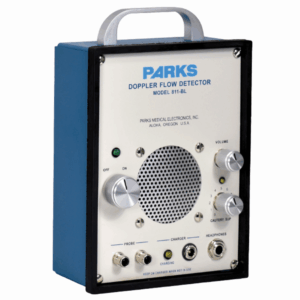
Parks Medical Ultrasonic Doppler Flow Detector 915-BL
The Parks Medical Electronics Model 915-BL is the dual-frequency Doppler in the Parks lineup — purpose-built for anesthesiology and surgical environments where a single-frequency unit simply isn’t enough. It houses two independent Doppler channels in one compact case: a low-frequency ~2.25 MHz precordial channel for detecting the passage of air emboli in the heart, and a high-frequency 8–9 MHz channel for arterial blood flow detection and systolic blood pressure measurement. This combination makes the 915-BL the go-to instrument for neurosurgery, cardiac procedures, seated craniotomies, and any case where venous air embolism (VAE) monitoring is part of the anesthetic plan.
On top of dual-frequency capability, the 915-BL includes a cautery suppressor with a controllable threshold — a step up from the fixed suppressor found in the 811-BL — allowing the clinician to dial in the suppression level to match the specific interference environment rather than applying a blanket cutoff.
IPR Medical is an authorized Parks Medical Doppler repair facility and one of only a few such centers in the country. Working closely with the Parks Medical technical team, IPR Medical buys, sells, repairs, and stocks genuine replacement parts for the Parks Medical 915-BL Doppler — including batteries, probes, and chargers. Whether you need a factory-quality repair, a certified refurbished unit, or expert Parks Doppler service you can trust, contact IPR Medical at 855-477-8866 or cs@iprmed.com.
Probes are not included in the purchase of the dopplers and are sold separately.
Parks Medical Electronics 915-BL — Specifications
| Manufacturer | Parks Medical Electronics, Inc. — Aloha, OR, USA |
| Model | 915-BL |
| Device Type | Dual-frequency non-directional ultrasonic Doppler flow detector with cautery suppressor — Class IIa active medical device |
| Primary Indication | Anesthesiology and surgical monitoring — venous air embolus (VAE) detection and arterial blood flow assessment; not intended for obstetrical use as primary function |
| Key Differentiators vs. 811-BL | Dual-frequency design — adds dedicated ~2.25 MHz precordial channel for air embolus detection alongside the 8–9.9 MHz arterial channel; controllable-threshold cautery suppressor — adjustable suppression level vs. fixed suppressor on 811-BL; aluminum carrying case included as standard |
| Low-Frequency Channel (Air Embolus) | ~2.25 MHz (specified 2.1–2.25 MHz); precordial probe — ¾ in diameter circular crystal, double-shielded cable, 5 ft standard cable length; used to detect passage of air emboli in the heart |
| High-Frequency Channel (Arterial Flow) | 8.0–9.9 MHz (specified); standard pencil probe (3/8 in diameter) or adult flat probe (3/8 in beam width, 15° from perpendicular); 5 ft standard cable length; used for systolic blood pressure measurement and peripheral arterial flow detection |
| High-Frequency Probe Matching | High-frequency probe and Doppler unit must match within 0.1 MHz — mismatched frequencies produce excessive static and unreliable signal (per Parks Medical technical team). Precordial probe plugs into dedicated low-frequency jack only. |
| Cautery Suppressor | Built-in; controllable threshold — operator adjusts suppression level to match the specific interference environment of the electrosurgical unit in use |
| Audio Output | Built-in internal speaker; auxiliary headphone jack (optional low-impedance stereo headphones); speaker disconnects when headphones plugged in |
| Power Source | Rechargeable 12V, 1.2 Ah sealed lead-acid battery; shipped fully charged and ready to use. Fully charged: ~14.5V; needs charging: ~11.3V; fails: ~10V |
| Battery Charger | 24VDC, 0.63A (domestic); 24VDC, 0.625A with international socket adaptors (international units); cannot overcharge battery; safety circuit prevents operation during charging |
| Fuse | 1A fast fuse |
| Carrying Case | Aluminum case with handle, removable lid, and space for accessories (Not Included) |
| Dimensions | 7.875 in L × 5.35 in W × 3.15 in D (20.0 cm × 13.6 cm × 8.0 cm) |
| Weight | 2.95 lbs (1.34 kg) |
| Operating Temperature | 50°F to 104°F (10°C to 40°C) |
| Operating Humidity | 30% to 75% relative humidity |
| Operating Atmospheric Pressure | 700 hPa to 1060 hPa |
| Storage / Transport Temperature | -40°F to 158°F (-40°C to 70°C) |
| Storage / Transport Humidity | 10% to 100% including condensation |
| Ingress Protection | IPX0 — no water ingress protection; avoid fluid contact with unit |
| Electrical Safety Classification | Type B Applied Part per IEC 60601-1; Class IIa active medical device |
| Country of Manufacture | USA (Aloha, OR) |
| Authorized Repair | IPR Medical is an authorized, approved Parks Medical Doppler repair facility — one of the few in the country. Send your 915-BL to IPR Medical for factory-quality service and expert repairs backed by a direct relationship with the Parks Medical technical team. |
| FDA Device Corrections | Class 3 correction on record (2007) for select serial numbers — premature battery failure due to manufacturing issue. See the Description tab for details and FDA resources. |
IPR Medical is an authorized Parks Medical Doppler repair facility. We buy, sell, repair, and stock genuine parts for the Parks Medical 915-BL. Contact us at 855-477-8866 or cs@iprmed.com.
Trademark Notice: Parks Medical, and all other brand names, model names, and part numbers shown are trademarks of their respective owners and are used on this page only to identify the original manufacturer’s equipment offered here, consistent with nominative fair use. This listing is offered by IPR Medical, an ISO 9001:2015-certified independent service organization, and is not sponsored by, affiliated with, or endorsed by Parks Medical.
Overview
The Parks Medical Electronics Model 915-BL is a dual-frequency non-directional Doppler flow detector designed for anesthesiology and surgical environments that require simultaneous capability for venous air embolus detection and peripheral arterial flow monitoring. It is the most specialized model in the Parks non-directional Doppler lineup — housing two independent Doppler channels in a single compact aluminum case. Manufactured entirely in the USA at Parks Medical’s facility in Aloha, Oregon, the 915-BL is purpose-built for operating rooms, neuroanesthesia suites, and any clinical setting where the risk of venous air embolism during surgery demands dedicated, continuous precordial monitoring alongside the vascular assessment tools the surgical team relies on.
Dual-Frequency Design — Two Dopplers in One Case
The defining feature of the 915-BL is its dual-frequency architecture. The low-frequency channel operates at approximately 2.25 MHz and is paired with a dedicated precordial probe — a 3/4 in diameter circular crystal with a double-shielded cable — that is placed over the right side of the heart. At this frequency, the Doppler is sensitive to the distinctive acoustic signature of air bubbles passing through cardiac structures, providing real-time audible detection of venous air embolism during surgical procedures performed in positions that carry VAE risk, such as the sitting (beach chair) position for posterior fossa and cervical spine surgeries. The high-frequency channel operates at 8.0–9.9 MHz and accepts standard pencil or adult flat probes for conventional arterial flow detection and systolic blood pressure measurement — the same capability found in the 811-series. This means the 915-BL replaces two separate instruments in procedures where both functions are required, reducing equipment clutter and setup complexity in the OR.
Controllable-Threshold Cautery Suppressor
The 915-BL’s cautery suppressor is more sophisticated than the fixed suppressor found in the 811-BL. Rather than applying a blanket cutoff to all electrosurgical interference, the 915-BL’s suppressor has a controllable threshold — the operator adjusts the suppression level to match the specific interference intensity of the ESU in use. This allows the Doppler signal to remain as sensitive and as audible as possible while still eliminating the noise generated by active cautery, rather than applying a single fixed gate that may over-suppress in some environments or under-suppress in others. For anesthesiology teams who rely on the precordial signal continuously throughout a procedure, the ability to fine-tune suppression is a meaningful advantage over a simple on/off implementation.
Clinical Applications
The 915-BL is used primarily in surgical and anesthesiology settings where venous air embolism monitoring is required. Procedures most commonly associated with VAE risk — and therefore with 915-BL use — include neurosurgical cases performed in the sitting position, posterior fossa craniotomies, cervical spine surgeries, total hip arthroplasties in the lateral decubitus position, and certain laparoscopic and obstetric procedures. The precordial probe is positioned over the right atrium and monitored continuously by the anesthesia team; any change in the characteristic Doppler signal indicates potential air entry into the venous circulation, prompting immediate corrective action. In the same procedure, the high-frequency channel can be used to monitor peripheral arterial pulses or assist with blood pressure measurement at sites where conventional auscultation is unreliable, eliminating the need for a separate Doppler unit at the bedside.
Probe Frequency and Compatibility
The 915-BL has two dedicated probe jacks — one for the low-frequency precordial probe (2.1–2.25 MHz) and one for the high-frequency arterial probe (8.0–9.9 MHz). The precordial probe must be plugged into the low-frequency jack only; it is not interchangeable with the high-frequency channel. For the high-frequency channel, the probe frequency and the Doppler unit’s tuned frequency must match within 0.1 MHz of each other. According to the Parks Medical technical team, a frequency mismatch beyond this tolerance will result in excessive static and an unreliable signal, making accurate flow detection impossible. The tuned frequency of the high-frequency channel is labeled on the panel next to the probe jack. Always verify probe-to-unit frequency compatibility before purchase or use. If you need assistance identifying the correct probe for your specific 915-BL unit, contact IPR Medical — as an authorized Parks Medical Doppler repair and service facility, our team works directly with Parks Medical and can help.
Power, Audio, and Controls
The 915-BL runs on a rechargeable 12V, 1.2 Ah sealed lead-acid battery and ships fully charged and ready for immediate use. The battery indicator lamp lights when the unit is on and blinks when charging is needed. The charger output is 24VDC at 0.63A and is designed to prevent overcharging. A critical safety feature prevents the unit from operating while connected to the charger, eliminating the risk of electrical shock through the patient-contacting probe circuit. The battery should be replaced if it is more than three years old or no longer holds an adequate charge. The unit is also fused with a 1A fast fuse for additional circuit protection. The internal speaker delivers real-time Doppler audio from the active probe channel and disconnects automatically when optional low-impedance stereo headphones are plugged in — headphones are particularly useful for anesthesiology monitoring in noisy OR environments where ambient sound can mask subtle signal changes. The 915-BL ships standard with an aluminum carrying case featuring a handle, removable lid, and interior space for the unit, probes, gel, and charger.
Electrical Safety and Use Precautions
The 915-BL is classified as a Type B Applied Part under IEC 60601-1, and all patient-contacting accessories comply with the relevant directives for protection against electrical shock. The instrument must not be used with a defibrillator, as the probe can transmit electric shock or cause burns in that configuration. During electrocautery procedures, the cautery grounding plate must be properly connected and the Doppler unit should be suspended from an insulator rather than placed on a metal surface — the controllable cautery suppressor manages signal interference, but proper grounding protocol remains essential for patient and operator safety. The unit must not be used in the presence of flammable anesthetic gases or high-oxygen environments. The probe epoxy coverings should be inspected before each use for cracks or breaks — damaged epoxy can allow coupling gel ingress that creates a shock or burn hazard. Any proposed connection of the 915-BL to external equipment such as computers or amplifiers requires a medical-grade isolation transformer and review by a qualified bioengineer.
FDA Device Corrections and Safety Bulletins
A Class 3 FDA device correction was recorded for the Parks Medical 915-BL in 2007, concurrent with the correction issued for the 811 series. The identified issue was premature battery failure caused by the use of incorrect acid flux on the circuit board during manufacturing, which could lead to degradation of the sealed lead-acid battery earlier than expected. The FDA classified this as a Class 3 correction — the least serious category, meaning the FDA determined that use of or exposure to the affected product was not likely to cause adverse health consequences. Parks Medical Electronics notified affected customers directly. Because FDA device corrections and safety communications may be updated or expanded after the date of this listing, IPR Medical recommends that facilities also check the FDA’s official resources directly to ensure they have the most current information.
FDA resources for the most current correction and recall information:
– FDA Medical Device Recalls Database
– FDA Medical Device Safety
IPR Medical — Authorized Parks Medical Doppler Repair & Service
IPR Medical is an authorized, approved Parks Medical Doppler repair facility and one of the few such centers in the United States. Working directly with the Parks Medical technical team, IPR Medical provides factory-quality repair and service for the 915-BL and the broader Parks Medical Doppler product line. Whether your unit needs a battery replacement, probe replacement, cautery suppressor service, dual-frequency channel calibration, electronic repair, or full bench service, IPR Medical’s technicians are trained and equipped to restore your Parks Doppler to proper operating condition using genuine Parks Medical parts. IPR Medical also buys and sells new and refurbished Parks Medical 915-BL units — including batteries, precordial probes, high-frequency probes, chargers, and carrying cases — so you can source your Parks Doppler equipment and service from a single trusted partner.
IPR Medical is an authorized Parks Medical Doppler repair facility. We buy, sell, repair, and stock genuine parts for the Parks Medical 915-BL. Contact us at 855-477-8866 or cs@iprmed.com.
Trademark Notice: Parks Medical, and all other brand names, model names, and part numbers shown are trademarks of their respective owners and are used on this page only to identify the original manufacturer’s equipment offered here, consistent with nominative fair use. This listing is offered by IPR Medical, an ISO 9001:2015-certified independent service organization, and is not sponsored by, affiliated with, or endorsed by Parks Medical.
| Weight | 2 lbs |
|---|---|
| Dimensions | 8 × 6 × 4 in |
| Arterial Probe Frequency | 8.9 MHz |
- Flat Probe
- Standard Pencil Probe
You may also like…


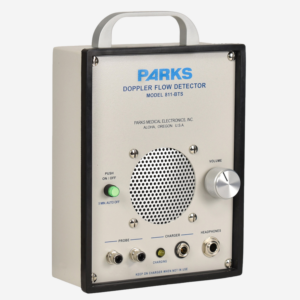

Parks Medical Ultrasonic Doppler Flow Detector 811-BTS
Original price was: $895.00.$795.00Current price is: $795.00.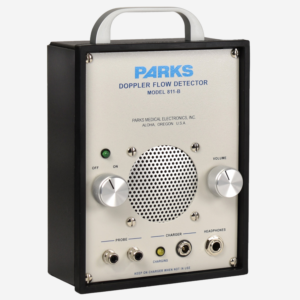
Related Products


Reviews
There are no reviews yet.